Propeller Guard Information Center

About Us

This page is part of the Propeller Guard Information Center, the largest site devoted purely to covering propeller injuries and how to reduce them.

About Us

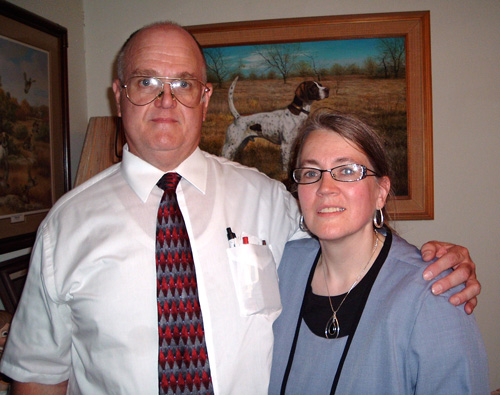
The Propeller Guard Information Center is webmastered by Gary Polson of Polson Enterprises. Gary is an advocate for propeller safety, and has especially promoted the development of Virtual Propeller Guards (the use of sensors to detect people in the water near propellers and the accompanying systems that take appropriate actions to prevent propeller injuries).

Gary's wife Lora helps with the office work, provides emotional support in the down times when it seems like the problem will never be addressed, acts as navigator on field trips so he doesn't get lost and keeps him inline.

Gary is a licensed professional engineer. While working as an engineer at MerCruiser in the early 1990's he came up with the idea of using sensors to detect people in the water near the propeller as an alternative to traditional propeller guards and tried to interest Mercury in the idea at that time. After he left in mid 1996 to pursue Internet opportunities, he continued to collect even more information on technologies, products, people and labs that made his Virtual Propeller Guard concept look yet more feasible. He posted the basics of his idea online as a Stealth Prop Guard in 1997. Gary approached the industry a few more times with his Virtual Propeller Guard concept while claiming no intellectual property rights for himself and was rejected. On 7 January 1999 he posted more extensive coverage of his Virtual Propeller Guard concept online as a series of 18 frames in an HTML slide show that was the first public exposure of his newly coined term "Virtual Propeller Guard" in hopes the industry would respond, but it did not.

He approached a local sensor lab that was not interested in the concept without corporate funding from a drive manufacturer.

Time went on and about March 2002 he created a web site devoted to his Virtual Propeller Guard approach titled, Prop Guard Update 2002: Virtual Propeller Guards,to accompany his 1999 presentation. This site also failed to generate industry response.

September 2002 brought the first ever public recognition of the Virtual Propeller Guard concept by a major player when Brunswick received a patent for an infrared sensor to detect people in the water near the propeller similar to the ideas Gary put forward at their MerCruiser subsidiary a decade earlier. The patent failed to cite Gary's work there or his online materials describing similar approaches. Gary contacted the patent examiner and asked why his online work was not cited. The examiner said he oversaw a junior examiner on that patent and they must not have found it. Gary asked the examiner to please file a note about our online center of technical information on propeller injury avoidance devices so examiners would be aware of it in the future. He said he would.

In December 2002 Gary proposed the creation of a Boating Industry Consortium to Address Propeller Injuries. The consortium would encourage working together on the problem, the collection of higher quality, more detailed data from propeller accidents, creation of a database of new products and technologies applicable to the problem, provide online reporting from those injured, encourage academic research in the field, provide awards to increase student projects in the area, foster true development in this field, and several related tasks. The industry never responded.

Also in late 2002 he provided major coverage of the Sprietsma v. Mercury Marine propeller injury suit that was decided by the U.S. Supreme Court.

With no response from the industry, Gary began to become fill the void of Consortium that never formed. He started by collecting propeller injury statistics, news reports of propeller accidents, listing the pros and cons of existing propeller cage and duct type guards, and developing an extensive list of propeller injury avoidance devices. About October 2004 he used that information to expand his existing Prop Guard Update site into the Propeller Guard Information Center.

Gary felt the listing of individual accidents would help put a face on the injured and help spur cooperative effort among all the players involved to address the problem, so he began to log accidents as time moved forward as well as to go backward in time.

In 2005 he successfully teamed with a student at a University in the Netherlands working on a student design project to lay some good groundwork for Virtual Propeller Guards. In this time frame he also significantly began to expand the bibliography of propeller accident materials available from the Propeller Guard Information Center.

In 2006, Gary created a major online center for Propeller Accident Statistics. The U.S. Coast Guard data is now accessible by more people and easier to understand than ever before.

He took a detour and spent some time collecting information on recreational boat propeller accidents in the early 1900's. Then spent some time thinking about all the generations of people effected by the loss of those killed long ago, as well as how those in the future will be impacted by propeller injuries and deaths of today.

September 2006 saw the issue of another Brunswick Virtual Propeller Guard patent. It focused on eliminating false triggers (crying wolf when there was not really someone near the propeller). Once again, Gary had put forward these basic ideas several years earlier online as he reported on similar approaches in other industries and at NASA. At least this time Brunswick cited his website four times in the patent references. However they did not specifically cite Gary's previous online discussions of eliminating false triggers. But interestingly in Brunswick's internal documents to the U.S. Patent Office (now available through the PAIR system) when they spent two pages of a letter describing Gary's online materials they refer to Gary as the "author" and not to him by name, even though he is a former Brunswick employee. The letter to the USPTO is signed by one of the gentlemen that refused to review freely offered additional materials on Virtual Propeller Guards from Gary after he left Mercury unless Gary signed a very lengthy legal document which he refused to do. Brunswick also had a virtual lanyard patent in 2006 (detects the operator has left the operators station, may have been ejected, and may be at risk for propeller injury from a circling boat so it kills the engine).

In their Sept/Oct 2006 issue, Boat & Motor Dealer, an industry trade magazine grossly understated U.S. Coast Guard statistics for propeller injuries and deaths. Gary jumped in immediately to encourage them to print a correction. They printed a minor acknowledgement in their April 2007 issue that, "It seems clear that such things do occur more tha a half dozen times a year..."

In 2006 Gary was able to visit onsite with some manufacturers of propeller injury avoidance devices and feel their spirit and determination to reduce propeller injuries. In October 2006, he posted one of his concepts for a swinging houseboat propeller guard. He thinks it may form the basis for new approach to alleviating houseboat propeller injuries from strikes while in reverse, while simultaneously removing many of the objections raised to conventional guards on houseboats.

Another 2006 event was redesign of the Propeller Guard Information web site to move many of the sub topics from the main page to their own page to reduce the extreme length of the first page.

In early 2007 he attacked houseboat propeller injury statistics and created the Houseboat Propeller Accident Statistics page as the number one source for propeller injury statistics surrounding houseboats.

Recently he helped raise awareness of the upcoming U.S. Coast Guard propeller guard testing opportunities to many manufacturers of propeller guards around the world. Plus he finally created an introduction to this page that makes it a little easier for newcomers to navigate and find some basic information.

Mid 2007 also saw the creation of "Introduction" and "About Us" sections for this web site in efforts to make it a bit friendlier and easier to navigate, as well as to form the basis for a future history of Virtual Propeller Guards.

We contacted propeller guard manufacturers and made sure they were aware of the U.S. Coast Guard opportunity for testing their guards during the development of the propeller guard test protocol.

Now Gary continues to expand his coverage of technologies he thinks would be useful in addressing the problem, encourages small manufacturers who have been making some inroads with interlocks and other safeguards, and encourages cooperation and communication among the many small manufacturers, boating safety groups and propeller safety advocates in their efforts toward reducing propeller injuries.

Recently Gary has been expanding his view of the problem in hopes of getting more ideas from other fields and is in the early stages of launching yet another site he hopes will bring academic assistance to the problem on several fronts. Plus he has been in communication with several groups outside the United States working on reducing propeller injuries, while teaming with some other groups promoting propeller safety to allow each organization to do what they do best and not have to re-invent the wheel.

2007 also saw the addition of three new areas to our website we expect to be developing further in the future. One focused on High Profile Propeller Accidents and identifies those accidents that received a lot of press and attention, some of them occurring many, many years ago. Another focused on identifying professionals that have been struck by propellers (rescue teams, firemen, members of the Coast Guard, military, etc.) The third area focused on those who have actually been struck by propeller guards.

In 2007 we also launched a page titled, Agendas, Motivations, and Incentives that discusses the forces behind many groups with an interest in propeller safety.

2007 and 2008 brought us in contact with several families whose loved ones were struck by propellers outside the United States, many of them struck while on vacation in major tourism areas. We have helped some of those families as they consider how they might be able to prevent others from going through what they have been though and/or how they might be able to assist others similarly injured. In addition, we have heard from a propeller safety advocate in one of those tourism areas. We plan on addressing issues surrounding propeller safety at international tourism destinations further in the future. We have also been helping those outside the U.S. considering propeller safety regulations.

Major accomplishments for 2008 include:

  • Our Aspects of the Debate Surrounding Propeller Safety Chart.
  • Publishing the Propeller Safety Device Radar Chart as a means of simultaneously comparing the effectiveness of several propeller safety devices on multiple characteristics.
  • Continuing to write our response to the withdrawal of the houseboat propeller safety proposal. We spent several hundred hours on this report which will be finalized in 2009.
  • Continuing to maintain our list of accidents, reporting news coverage, monitoring and publishing technologies that might be useful to those designing propeller safety devices.
  • We spent considerable time investigating propeller cut analysis on marine mammals (mostly manatees and whales) and how that analysis could be related to propeller cuts on humans.
  • We published information on a system that could radically reduce blunt trauma of being struck by propeller guards at moderate boat speeds. We call it the Trim Cylinder Trail Out. It was patented in the old days and is now in the public domain.
  • We spent considerable effort investigating a design method exploiting certain principles of fluids that could very significantly reduce drag of conventional cage type propeller guards and will be publishing those results in early 2009.

Projects for 2009 finished or nearing completion (as of 4 December 2009) include:

  • We are now settled in after a physical move of our location in late 2008.

  • We attended the National Boating Safety Advisory Council (NBSAC) in Orlando Florida in April 2009 and visited face to face with many involved on all sides of propeller safety issues.

  • In June and July 2009 we spent considerable time covering and reflecting on the Decker vs. OMC trial in Naples Florida. We covered the numbers surrounding the case via Naples Daily News coverage on a page called, Decker Propeller Trial by the Numbers, and later published a synopsis / scorecard of the trial titled, Decker v. OMC" A Scorecard of the Trial.

  • We have also been increasingly active with groups promoting propeller safety outside the United States and with families of victims injured outside the United States (often one and the same).

  • Calling attention to the two old Brunswick "Trail Out" patents that appear to have direct application to reducing blunt trauma (3,999,502 and 4,050,359).

  • Posted an invention declaration (public disclosure) of our Propeller Guard With Reduced Drag and placed it in the public domain for use by others.

  • Spent some time studying ROPS (Roll Over Protective Structures often used on tractors) and their similarities to propeller guards (design, acceptance, resistance to regulation, getting public and farmers to install them, etc.)

  • Created a Message to New Propeller Safety Advocates page in order to more effectively provide guidance to them.

  • Published a Who is Who in the Debate Surrounding Propeller Safety directory of those involved in propeller safety issues, both current and past.

  • Submitted a propeller injury statistics chart to USCG as an example of how they might be able to report 3 cause accident data and total data in a less confusing manner. This would reduce the frequency of journalists printing Event 1 data as the total number of propeller injuries/fatalities. USCG has reported they liked it and are strongly considering using a chart roughly based upon our concepts in their next Annual Boating Statistics report.

  • In November and December we covered the Safety Propeller, an invention from Australia by Colin Chamberlain. We posted coverage of his wins on the ABC Australian New Inventors show and additional information about the propeller. We also tried to make several groups concerned with propeller safety around the world, aware of his work.

  • We are in process of publishing a list of propeller guard tests conducted by many groups.

  • We are in process of increasing our online presence through social networking.

  • We are still working on an article and a large accompanying check list to help recreational boaters evaluate the risk level of propeller injuries to those on and around their vessel, and to evaluate which steps, products and services might best reduce those risks, including steps to better educate themselves. This project will be delayed till 2010 due to other demands on our time (other projects and earning a living).

  • We have web published the 3rd rough draft of our response to the U.S. Coast Guard, on the withdrawal of proposed propeller injury avoidance regulations on non-planing houseboats. The report will be finalized in January 2010. This is the largest project we have ever undertaken. It will be a very comprehensive document when finished and will be useful far beyond houseboat applications. We have actually finished an unpublished 4th rough draft and just need to put a few finishing touches on it.

More about our 2009 plans can be seen on our To Do List.

We have yet to make plans for 2010, beyond trying to finish up the items still in progress on our 2009 agenda. We suspect our biggest 2010 contribution may be finally publishing the houseboat propeller paper. It is becoming a seminal work.

As seen in our Mission Statement, we continue to press on.

Polson Enterprises also provides new product development services to companies developing propeller injury avoidance devices. We also provide information support and expert witness services to legal professionals working on propeller injury cases. If you should need any of these services, please contact us.

Return to Propeller Guard Information Center